
A residential septic tank is an air-tight holding tank buried in the ground, away from freshwater sources, that collects wastewater, usually holding between 1,000 and 1,500 gallons of waste. Waste from toilets, sinks, showers and other drains flow into the tank from one drainage pipe out of your house.
Septic Tank 101
How Septic Tanks Work
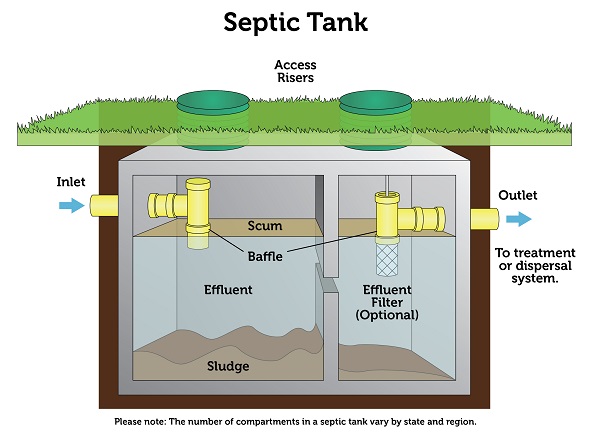
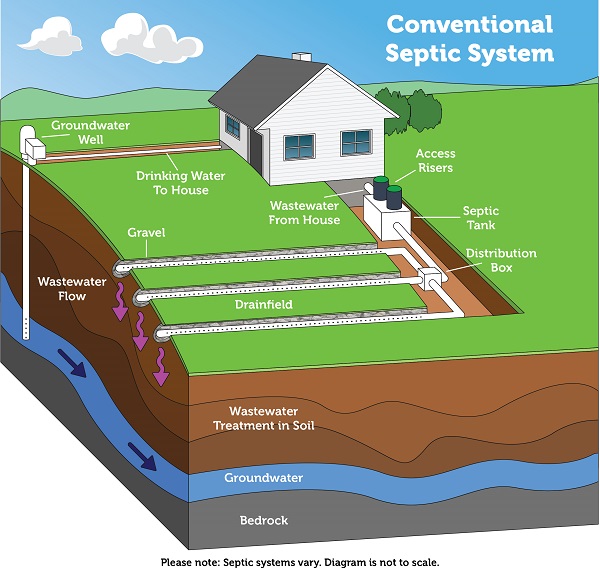
Solid waste, or sludge, sinks to the bottom of the tank where microorganisms and bacteria (the bugs) break it down. Grease and oil floats to the top, creating a scum layer. The middle layer is liquid waste, called effluent, and it contains bacteria and fertilizer chemicals such as nitrogen and phosphorous. The middle layer leaves the tank as more liquid waste comes in, and it enters the distribution box, or D-Box. The D-box distributes the liquid evenly to the drainage field, known as the leach field, where a series of pipes with stone are designed to absorb the effluent into the ground.
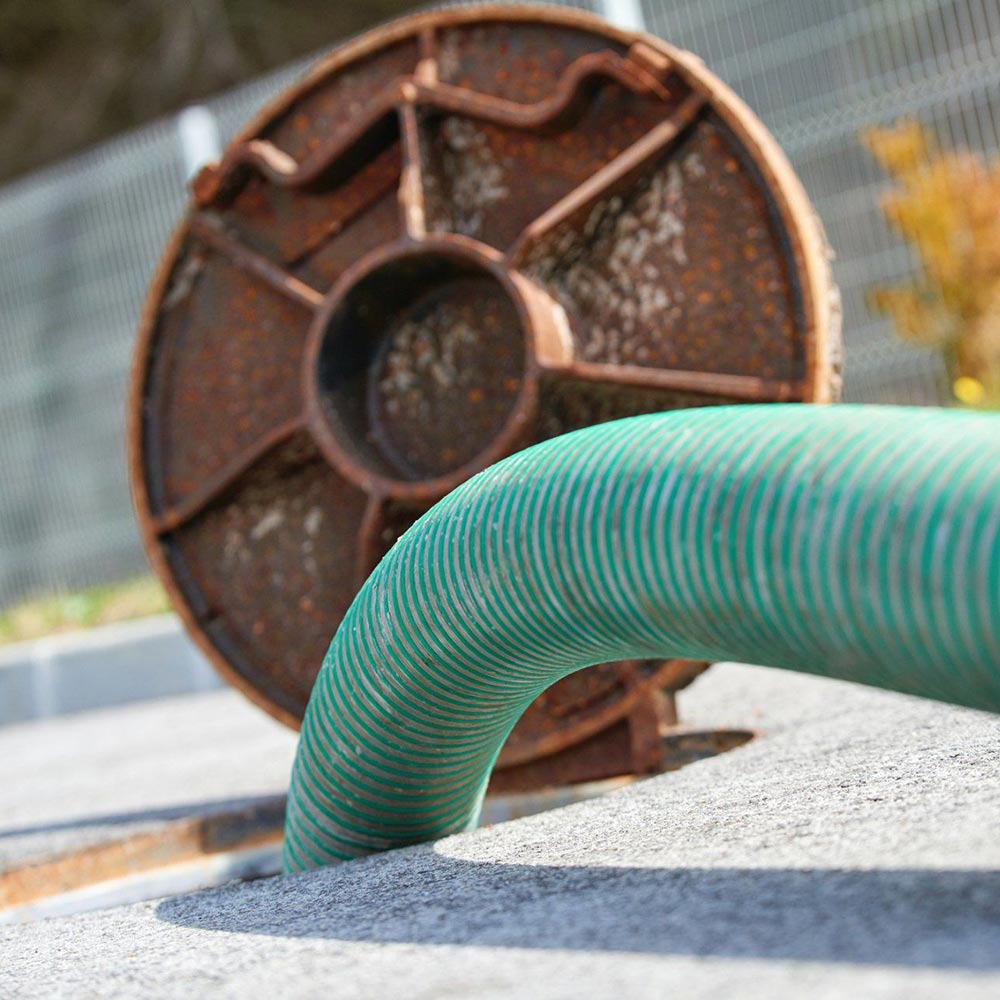
Over time, the sludge builds up on the bottom of the tank to a level where it reduces the ability of the bugs to do their job, and it limits room for liquid waste in the tank. The tank becomes full of solid waste, rather than a mix of liquid and solids. This is when problems can develop, and the septic tank needs to be pumped or emptied.
Signs You Need to Empty or Pump Your Septic Tank
- Strong sewage smell inside or outside your house
- Toilets not flushing
- Toilets backing up
- Basement filling with sewage
- Cleanout leaking sewage
- Gurgling noises in pipes
What Our Customers Say
I needed my septic pumped, I researched the businesses in my area. I prefer supporting “ family owned” businesses. After checking costs and reviews I went with Action Septic. Scott was professional and very personable. I highly recommend this company. Thanks Scott, I’ll see you in 4-5 yrs.
Kathy R